
Simple care guide
How to Clean Glass Tumblers Without Cloudy Buildup
A simple glass tumbler cleaning routine for the cup, lid and straw, plus tips for avoiding cloudy residue and stale smells.
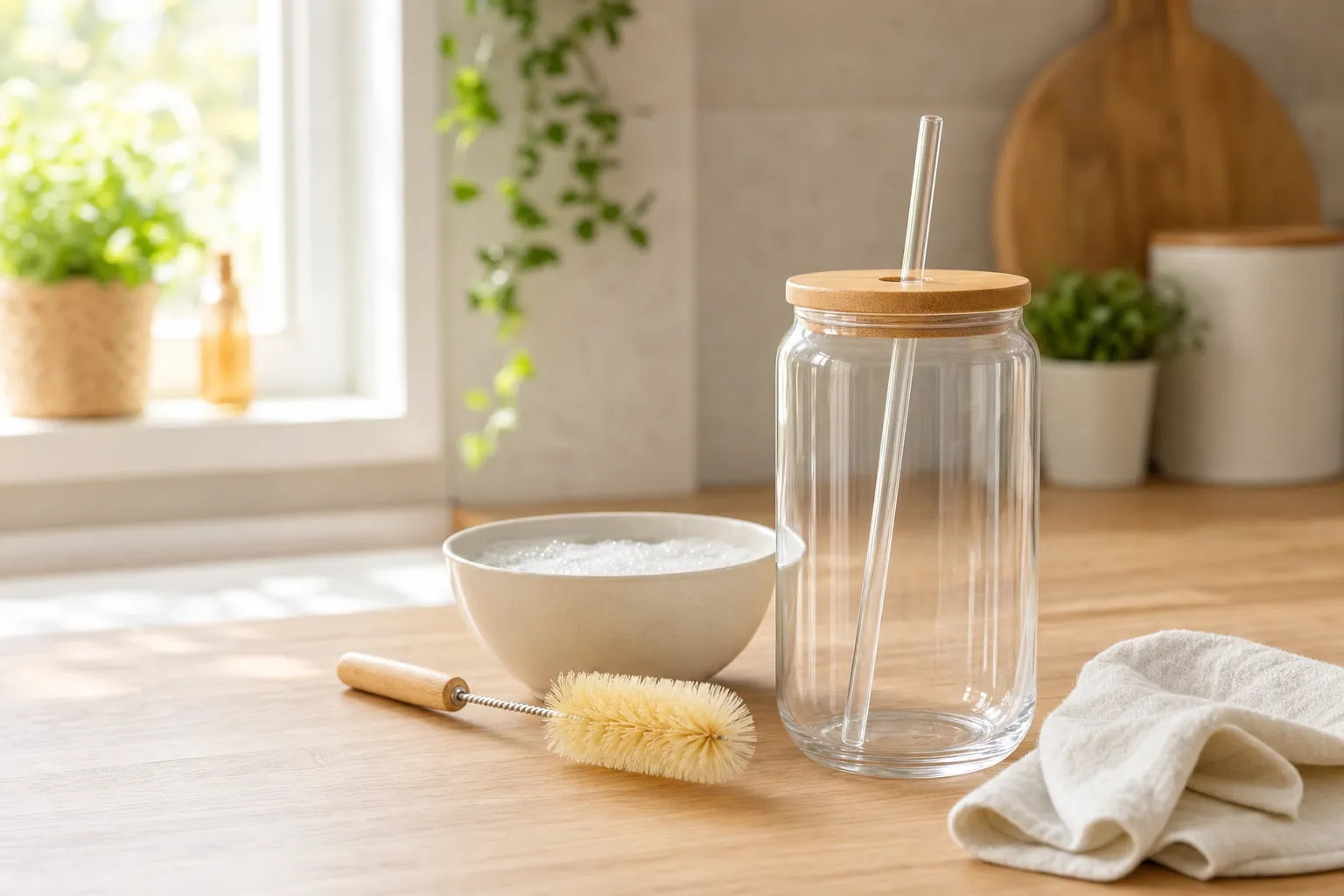
A glass tumbler earns its place on the counter fast. It works for iced coffee, water, tea, juice and whatever makes an ordinary afternoon feel a little more put together. The only catch is that a quick rinse is not always enough. Sweet drinks can leave a film, a straw can hold onto flavor, and a damp lid can start to smell stale.
The good news is that learning how to clean glass tumblers does not require a cabinet full of products. A mild soap, soft sponge, skinny brush and a few careful habits keep the cup clear and pleasant to use. The routine below is meant for a reusable glass tumbler with a lid and straw. Always check any care instructions supplied with your particular cup, especially when it has a printed, vinyl or customized design.
Start by treating the tumbler as a few separate pieces
Before you wash anything, take the tumbler apart. Remove the lid, pull out the straw, and separate any silicone seal that is designed to come off. Each piece dries at a different pace, and the little spaces around a lid or straw opening are exactly where old drink residue can hide.
It also helps to clean your hands before you start. The CDC recommends washing hands with soap and clean running water before handling food and drink items. That is a small step, but it keeps a freshly cleaned cup from picking up new residue before you even use it.
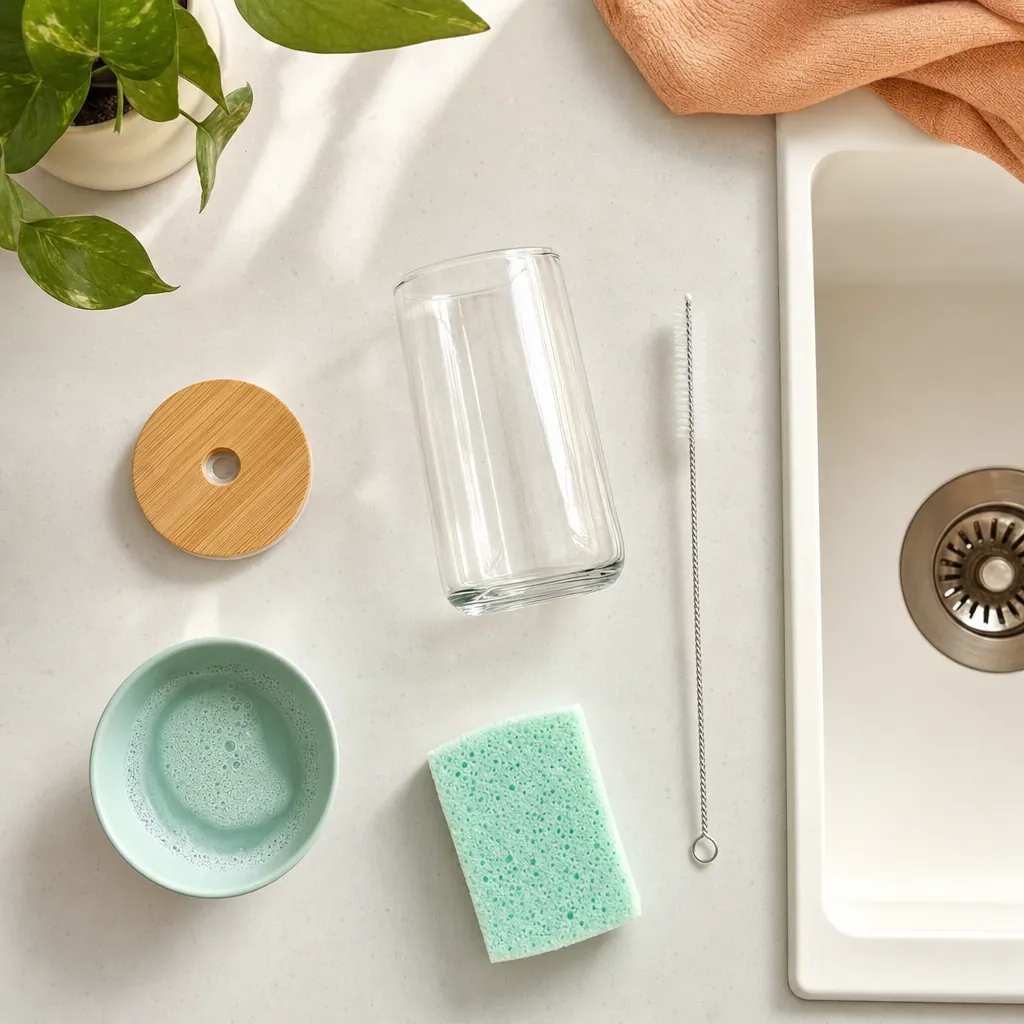
1. Rinse it as soon as the drink is finished
A fast rinse after you finish is the easiest way to avoid a bigger clean later. Empty the tumbler, rinse the inside with warm water, and send water through the straw. This matters most after coffee, tea, juice, soda, smoothies, milk-based drinks and anything syrupy. Those drinks can dry into a sticky ring that takes more scrubbing than it deserves.
Do not worry about making the rinse perfect. The goal is simply to keep residue from sitting in the tumbler until tomorrow. If you are heading out, leave the lid off rather than sealing a damp, partly rinsed cup in a bag. Air is much friendlier than trapped moisture.
2. Wash the glass gently with warm, soapy water
When it is time for a full wash, use warm water, a few drops of mild dish soap and a soft sponge or cloth. Wash the inside first, then the outside, working around the rim and base. Avoid an abrasive scouring pad. Glass can look tough, but harsh scrubbing can leave fine marks that catch the light and make a clear cup look dull over time.
Take a moment at the rim, where lipstick, coffee oils and drink splashes tend to settle. If your tumbler has a decal, custom name or other applied artwork, clean around it with a soft cloth instead of hard scrubbing. The goal is a clean cup that still looks like the piece you chose.
For everyday drinkware, the FDA's safe food handling guidance also reinforces the basics: clean food-contact items well and rinse them after washing. Give the glass a thorough rinse until the water runs clear and there is no slippery soap feel left behind.
3. Give the straw and lid their own attention
The straw is the part most likely to be missed. Run a narrow straw brush through it with warm, soapy water, then rinse it from both ends. If you use a reusable glass straw, inspect it in the light before putting it away. If you still see a line of color or a faint film inside, brush it again rather than hoping the next drink will rinse it out.
For a bamboo lid, keep the wash brief. Wipe or gently wash both sides, rinse off the soap, and dry it promptly with a towel. Long soaking can be rough on natural materials. If the lid has a removable silicone ring, clean and dry that separately before putting it back. Those two pieces are much happier when they do not stay damp together.
4. Clear away cloudy buildup without going overboard
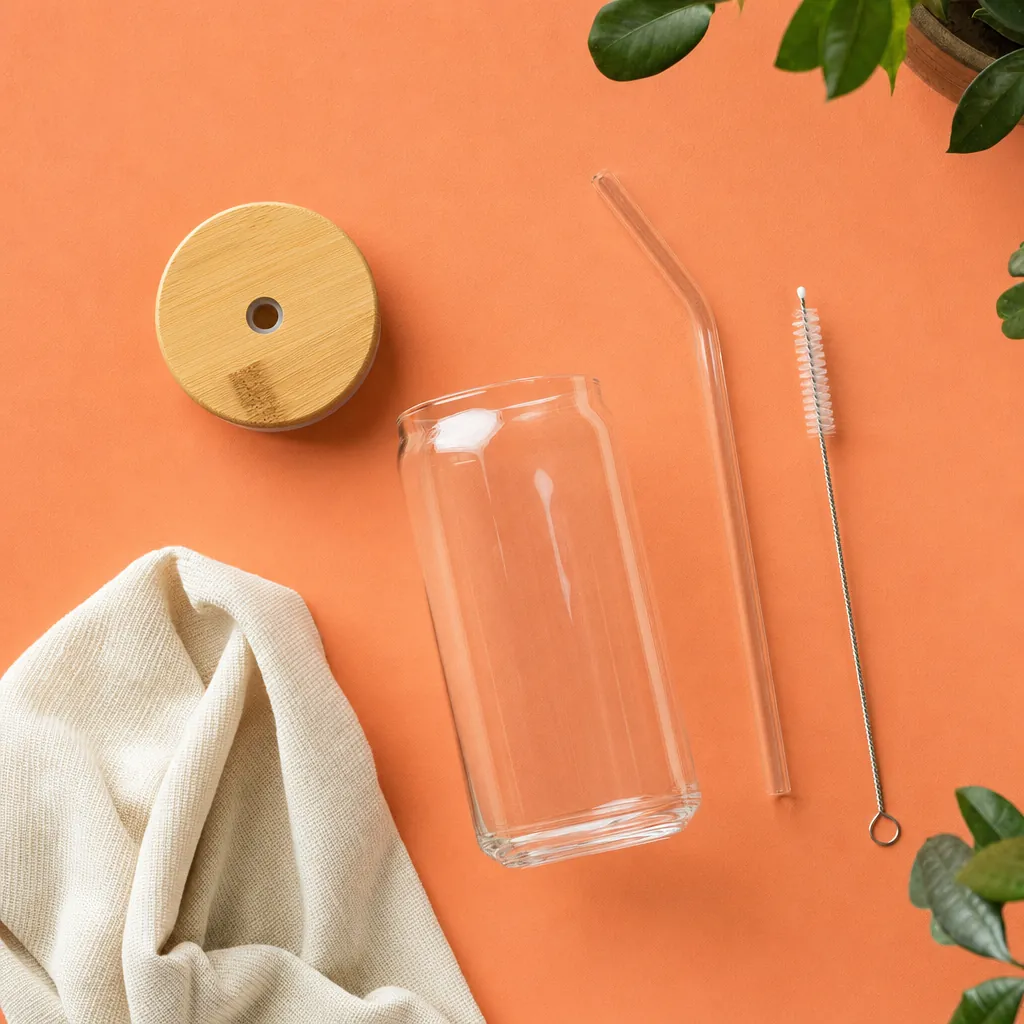
Cloudiness is often just a mix of dried minerals and drink residue. Start with the gentlest option: warm water, mild soap and a soft cloth. If the glass still looks hazy, use a brief soak of equal parts white vinegar and warm water inside the plain glass portion. Five to ten minutes is usually plenty. Follow it with a normal wash and a careful rinse.
Be selective with that extra step. Vinegar is useful for plain glass, but do not assume every decorated tumbler, coated lid or custom design will react the same way. For a piece with a printed or vinyl design, follow the maker's specific care advice first. A little patience is better than trying three strong cleaners and turning a favorite cup into a science experiment.
Skip bleach, harsh powders and metal scrubbers for your everyday tumbler. They are more force than this job needs. If a stain or odor will not lift after a gentle clean, it is reasonable to ask the maker what is safe for that exact material and finish.
What to do when you cannot wash it right away
Real life does not always put you next to a kitchen sink. If you finish a drink in the car, at work, in class or while running errands, empty the tumbler as soon as you can. A quick rinse from a water bottle is better than leaving coffee, juice or melted ice in the bottom for hours. If you do rinse it, keep the lid off until you can wash and dry the cup properly.
For the trip home, carry the tumbler upright when possible and avoid dropping the straw or lid into the bottom of the cup. That simple habit keeps the pieces cleaner and prevents the straw from rolling around in leftover drink. If a cup has held a milk-based drink or smoothie and will be sitting for a while, make full washing the first thing you do when you get home.
A small straw brush is easy to keep in a kitchen drawer, work bag or travel pouch. You do not need a miniature cleaning station everywhere you go. You only need a plan that stops residue from becoming a bigger job later.
5. Dry every piece before you put it back together
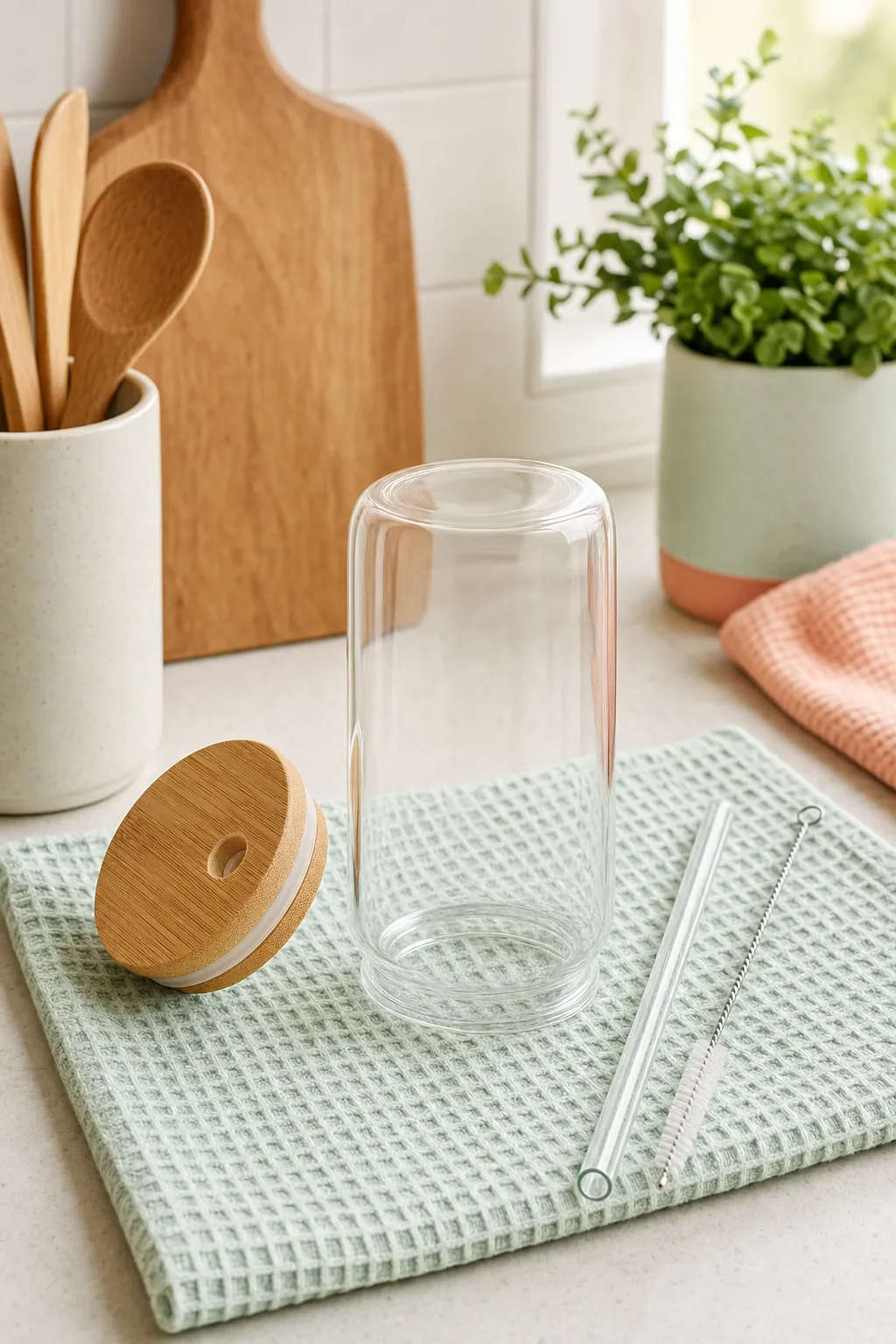
Drying is the unglamorous step that keeps a clean tumbler feeling clean. Set the glass upside down on a clean towel or drying rack so water can leave the rim. Let the straw drain separately, and allow the lid to dry in the open. Reassembling the tumbler while the inside is damp can trap a musty smell, especially around the lid seal.
If you are packing a tumbler for later, make sure it is fully dry first. A dry cup can sit happily in a cupboard or bag. A sealed wet cup is basically an invitation for tomorrow's drink to taste like yesterday's mistake.
Small habits that keep glass tumblers looking clear
- Do a quick rinse after every drink, even when you cannot fully wash the tumbler yet.
- Use a straw brush after coffee, smoothies and flavored drinks, not just after water.
- Keep natural or bamboo lids out of long soaks and dry them promptly.
- Use a soft sponge, never a rough scouring pad or metal brush on the glass.
- Leave the tumbler open until it is fully dry before storing it with the lid on.
- Check the care note for custom or decorated drinkware before using a dishwasher or strong cleaner.
This routine is short enough to keep. That is the point. A tumbler does not need a ceremonial cleaning process. It just needs the parts that collect residue to get the same attention as the visible glass.
A simple weekly reset makes daily care easier
Daily rinsing and washing do most of the work. Once a week, take an extra minute to look over the whole tumbler in good light. Check the straw for a faint line inside, look around the lid opening, and make sure any removable seal is clean and fully dry. This is also a good time to notice whether the glass is starting to look dull instead of clear.
Think of this reset as a refresh, not a deep clean. Fill the glass with warm, soapy water, brush the straw, wipe the lid, rinse everything well and let the pieces dry apart. That small routine helps you catch buildup before it becomes something that needs soaking or extra scrubbing.
It is especially useful if more than one person uses the same tumbler style in your household. Cups with matching lids and straws can get mixed up fast. Cleaning and drying each set together makes it easier to grab a fresh, complete tumbler the next morning.
Choosing a tumbler you will want to keep using
The best reusable cup is one that fits into your real day. A straw you can brush, a lid you can dry easily and a shape that feels good to carry all make the care routine more likely to happen. When the cup also feels personal, it becomes a small everyday favorite instead of one more thing in the cabinet.
Custom Creations By Patty makes handmade drinkware for those daily coffee, tea and water moments. You can browse the current shop collection, take a closer look at the Coffee in Heart glass, or ask Patty a question about a particular piece. For more order and return details, the site also has a clear FAQ and refund policy.
Glass tumbler care questions
Can glass tumblers go in the dishwasher?
Check the maker's care instructions first. A plain glass cup may be dishwasher-safe, but a tumbler with a decorative design, bamboo lid or specialty finish may need gentler hand washing. When in doubt, hand washing is the more careful choice.
How do I get cloudy buildup off a glass tumbler?
Start with a warm wash and rinse. If a cloudy film remains, let the glass sit briefly with a mix of equal parts white vinegar and warm water, then wash again with mild soap and rinse well. Do not use this on a decorated tumbler unless its maker says the finish can handle it.
How often should I clean a tumbler straw?
Clean the straw after every drink, especially after coffee, smoothies, flavored drinks or anything with milk. A slim straw brush reaches the inside where a quick rinse cannot.
How do I stop a bamboo tumbler lid from smelling?
Wash the lid promptly, rinse away soap, towel it dry and let it finish drying in the open. Do not leave it soaking or seal it onto a damp tumbler, because trapped moisture can leave a stale smell.